where the wild things grow
notes from this season of women, roots, and quiet transformations

True to its namesake, the food forest at the farm lives in wild devotion - always overgrown and always abundant.
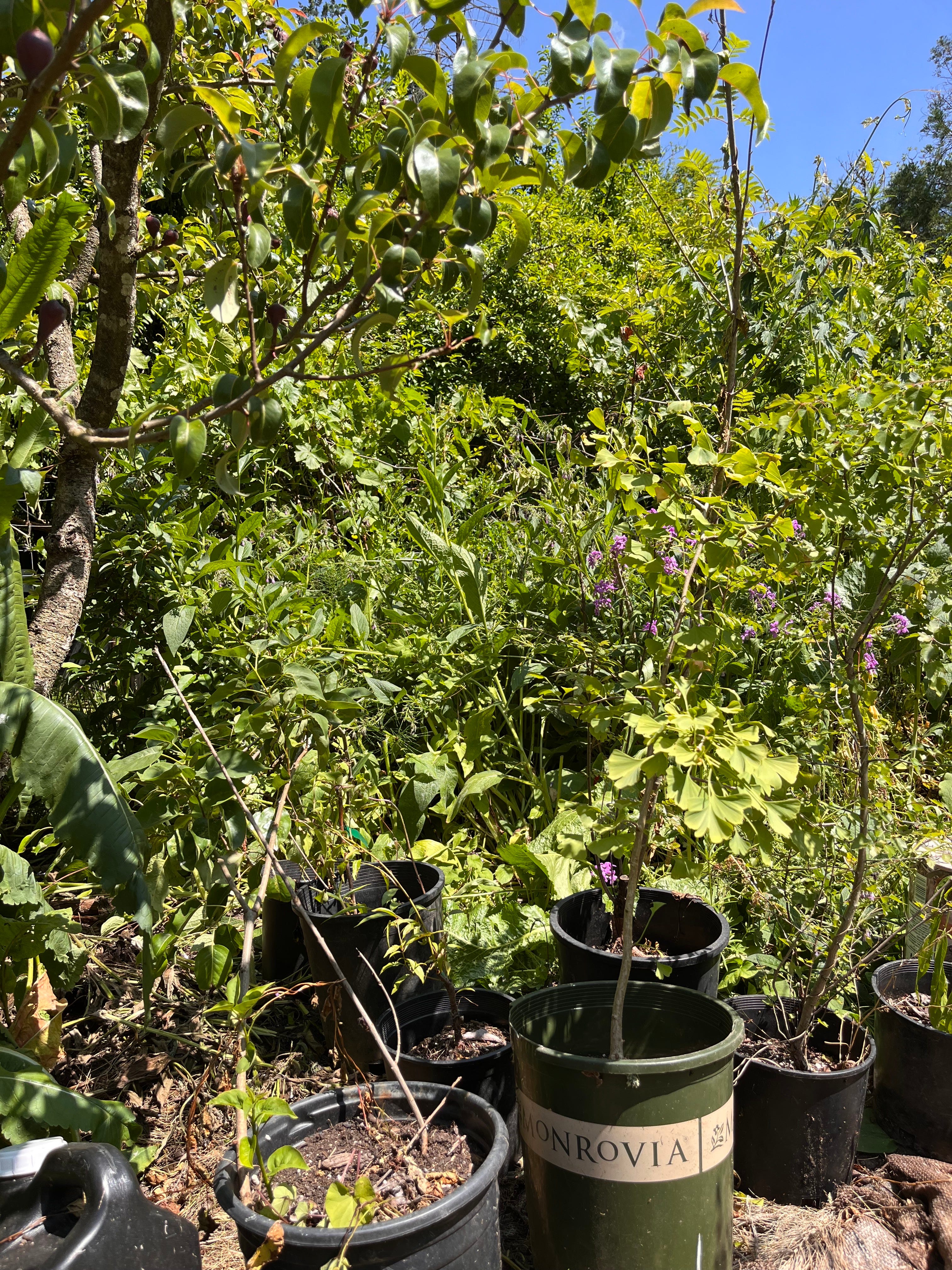
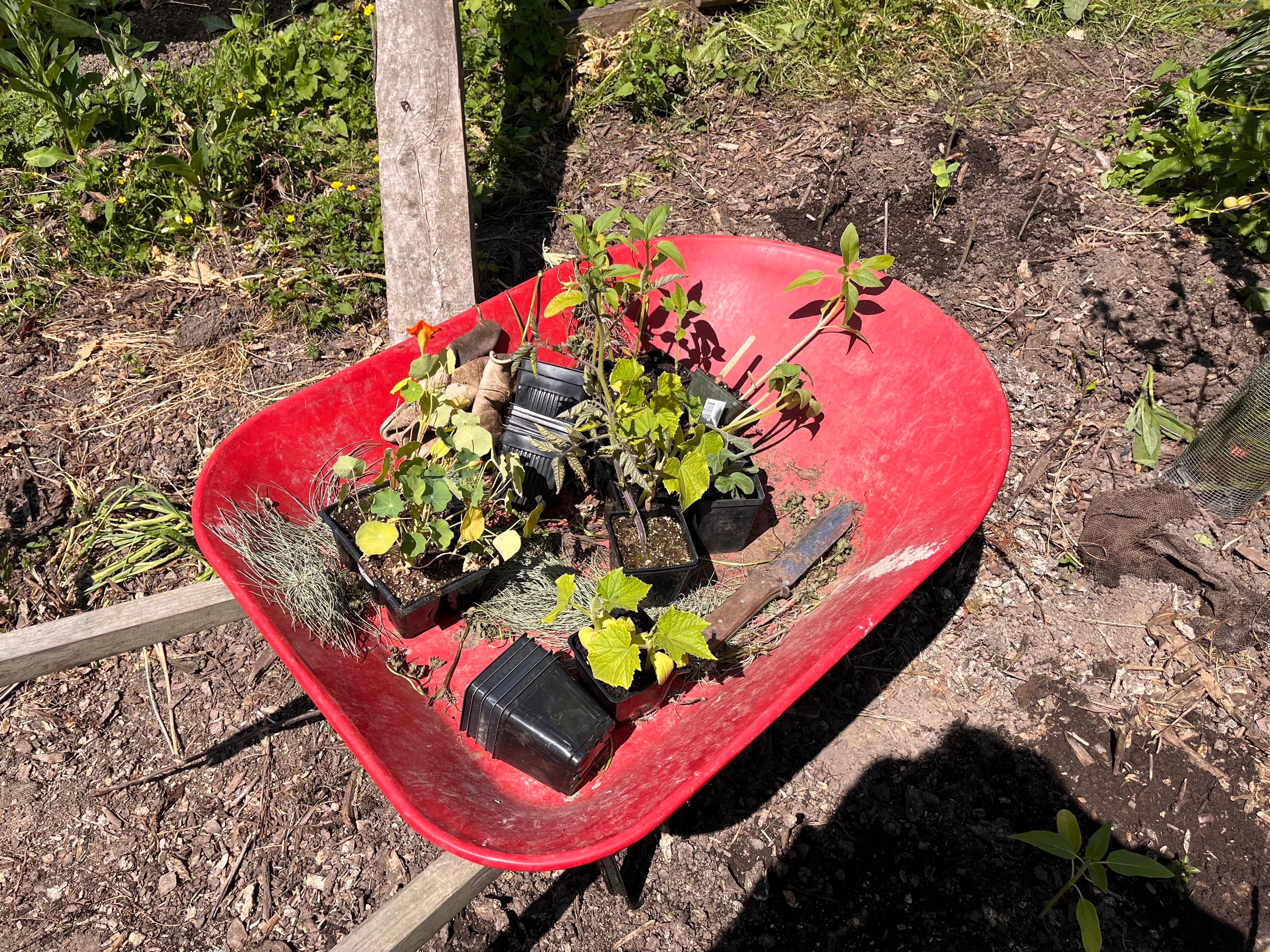
For the past month, I’ve spent little time in the forest, choosing instead to focus on more urgent tasks in the main farm areas: re-edging and tilling beds, pulling weeds (so many weeds), and planting lettuces, tomatoes, and other tender starts that have been gathering strength in the greenhouse since early spring. Now that they are happily in the dirt, I can turn attention back to the near-constant tending that the food forest seems to ask of our little group.
Evenings have become quite a tender return ritual for us girls.
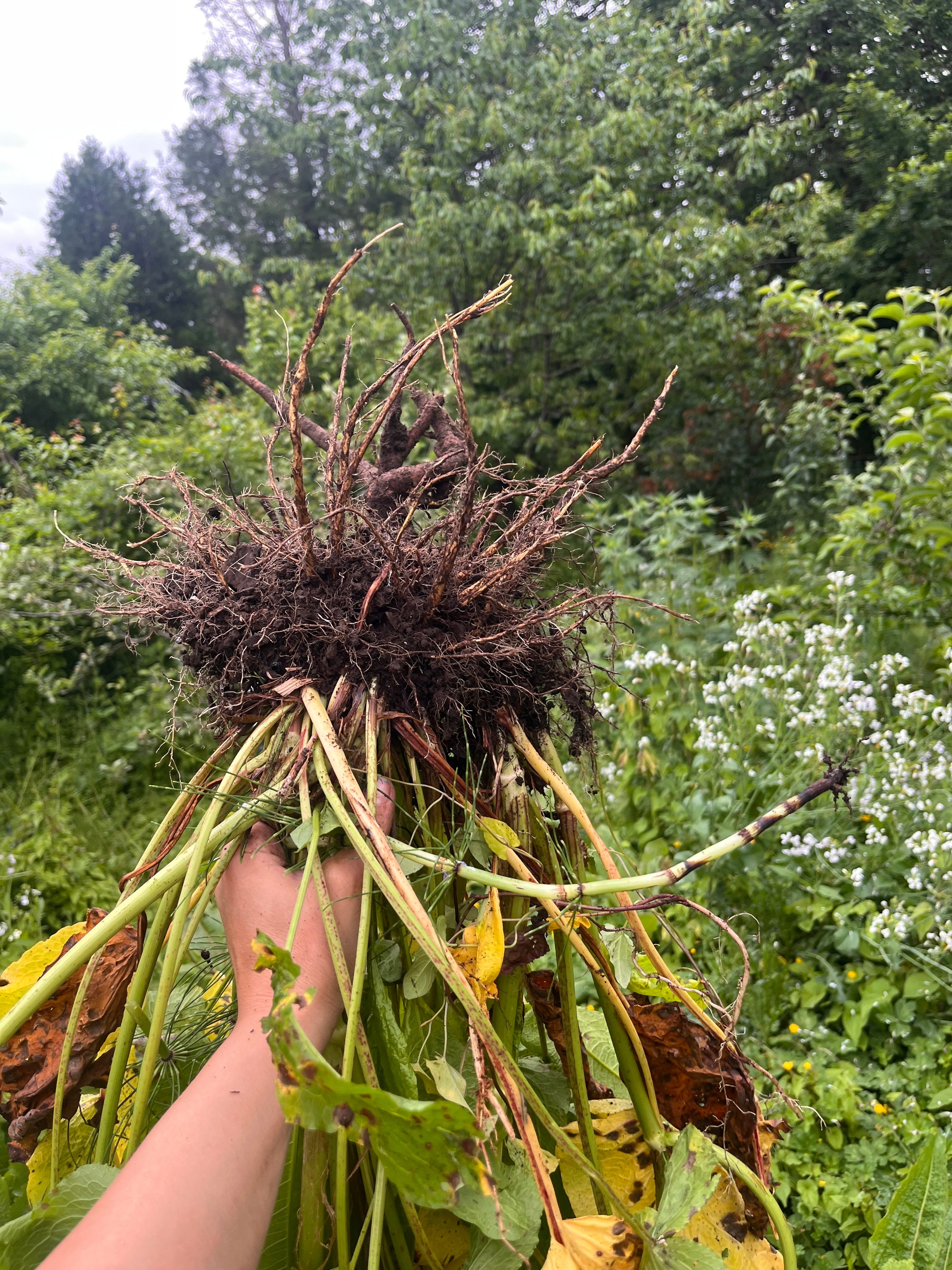
Sharon, Kelly and I spend twilight hours in a bliss, out amongst the tangle of the forest. There’s a joke in here somewhere about the softness of female company vs the heaving required to free yellow dock and other rooted interlopers from places they’ve overstayed. We throw our heads back in laughter and fall bottom-first to the hard earth after finally prying a stubborn horseradish from the ground. Mud on my knees and breath catching from laughter, I feel I am shedding an old skin.
Kelly and Sharon move through the world of plants with a knowledge far deeper than mine, but I’m catching up with a kind of caffeinated hunger. Kelly’s hands are precise, pulling only bindweed, yellow dock, comfrey, and thistle, leaving the tender strawberries, silvery mugwort, and delicate starts of fruit trees to grow in peace.
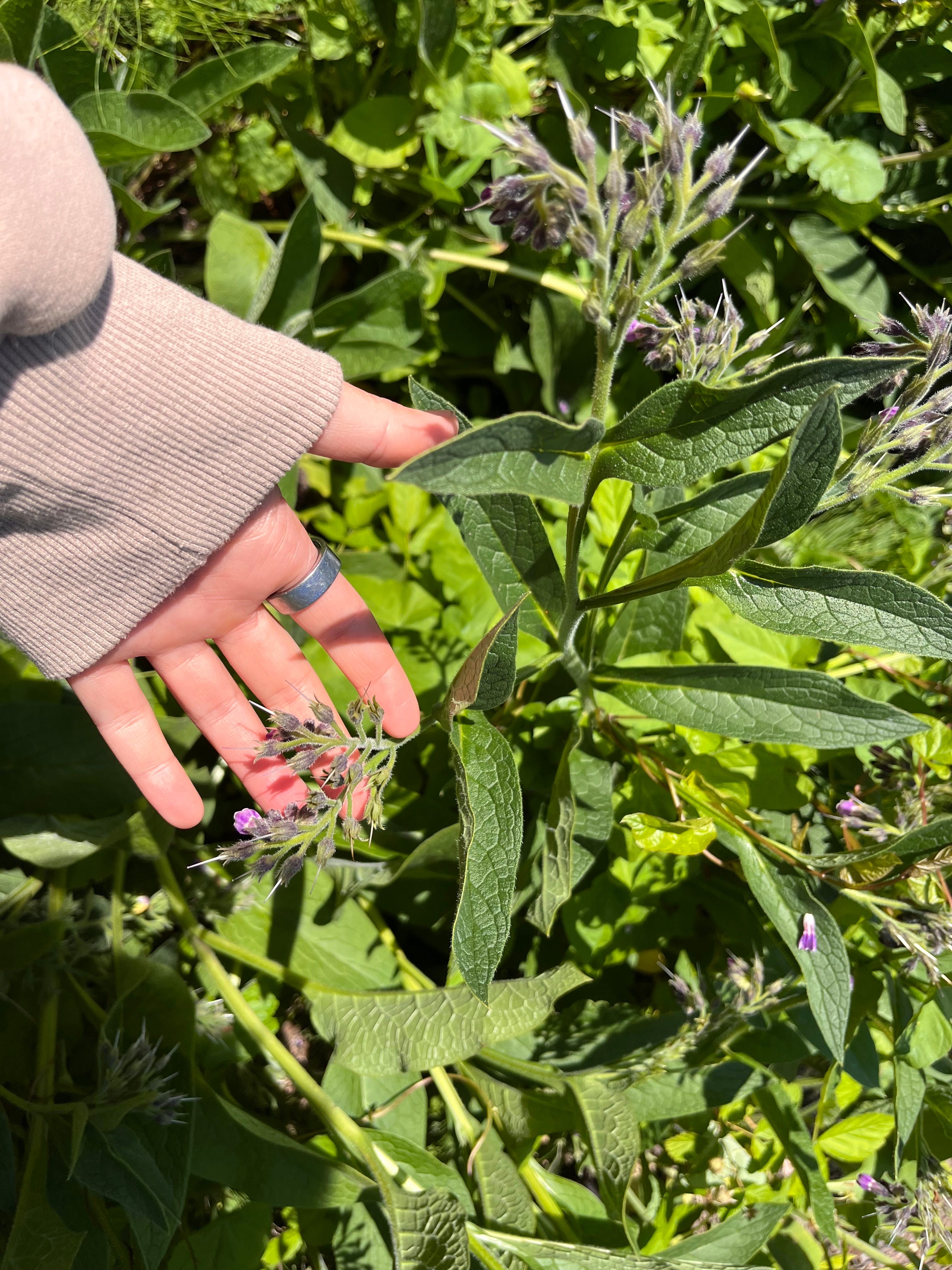
I’ve never been so good with names (but will never forget a face), and I find it’s the same with leafy things: the broad, matte leaves of what is known as yellow dock, the slippery, waxy vine of bindweed between my yanking fingers, or the small white flowers of a healing yarrow. And, just as with people, I find it much easier to commit their names if I just pause to learn their stories:
Yellow dock grows low and wide, with wavy leaves that gather at the base and tall seed stalks that rust to brown by late summer. Her taproot runs deep and can be tough to dig out, but it’s worth knowing. Her root can be made into a powerful liver tonic, often used to support detoxification.
Bindweed moves like a killing whisper, wrapping itself around everything tight and fast. There’s not much love for it among growers as it crowds out other plants and is nearly impossible to fully remove. But over dinner one night, Kelly said that it carries a medicine too - mild, even hallucinogenic. And not the kind you take casually. This is a plant you have to know, really know, before it offers anything back.
Thistle makes herself known by feel more than sight (gloves are non-negotiable). Despite her sting, she is medicine. She supports liver function, and the roots aid in digestion (Kelly made some thistle roots into a milk last week).
Horseradish puts up a fight. The roots grow deep and sprawling, and no matter how much you think you’ve loosened the soil, it always takes one more full-body pull. Aside from being a punchy sushi side, there’s a real medicine in using it to clear sinuses, stimulate circulation, or make fire cider.
Comfrey is everywhere if you let it be. Its broad, fuzzy leaves and deep roots make it hard to ignore. We’ve pretty much given up on keeping it contained (she is proud & spunky and I like that about her). She is rich in allantoin and can be used to help bruises, sprains, and broken bones heal.
Mugwort grows near the edges. Silver-green and quiet, she’s known for supporting digestion and stirring vivid dreams.
Yarrow holds the borders of the garden like a sentry. Her feathery leaves and small white flowers have been used to stop bleeding, lower fevers, and support the body through transitions.
—
I’m blessed to be getting so very much closer to mother (nature), and finding her to be quite funny and literal.
On days where I’ve walked with too much hubris. Alors, she says, be humbled by pulling horse radish from the earth.
Or when I’m ill and swollen. Alors, she says, may your fingers be stung by the sweet thorns of nettle.
Or when a stamina boost is needed to continue my good work with her. Alors, she says, enjoy a tiny strawberry that I’ve made just for you.
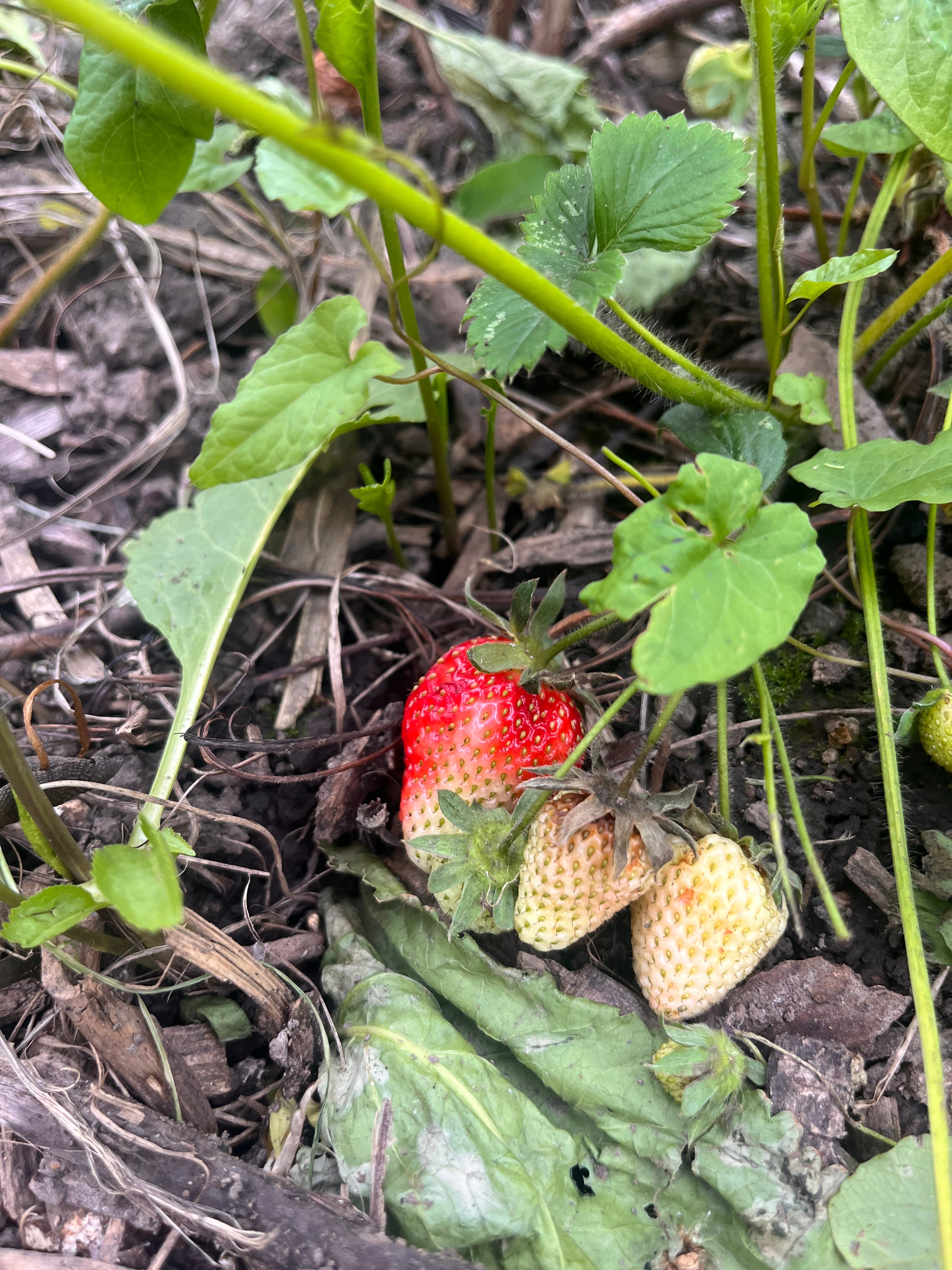
And I cherish that on any old day, there’s a new way to work with her. I recently learned from a friend that cottonwood buds, for example, must be harvested in early spring, at the latest. The buds are fragrant and sticky, and play well with oils. After a few months of infusion, you can blend and use as a hard working salve to remedy bumps and bruises (I used it on my back when I tweaked it pulling weeds just recently).
Soon we’ll have more tomatoes than we know what to do with, and Sharon, Kelly and I I will break out the canning supplies. We’ll reinvent 1,001 ways to eat, can, and love tomatoes. And then we’ll be rich, so rich, in the winter.
Love you -